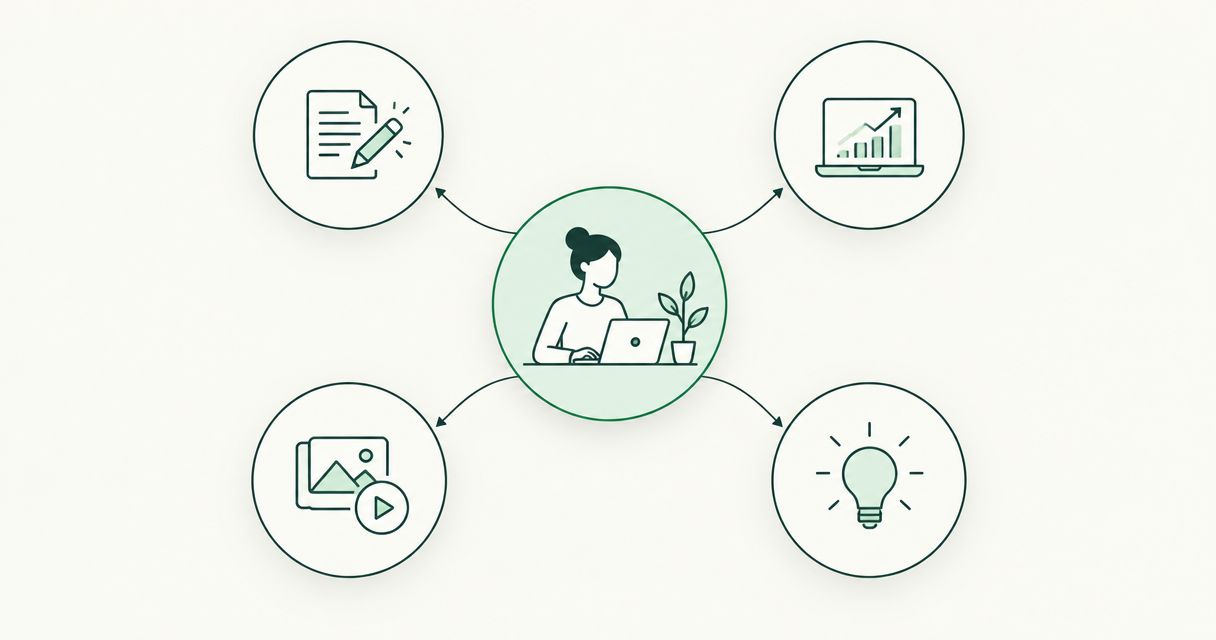
Writers’ home-based side hustles are services that turn writing skills into a defined customer deliverable, with the aim of building a business around work you can complete remotely. The most practical side hustle ideas from home start with editing, newsletters, website copy, or articles—not a promise of passive income—and fit your actual schedule.
- For writers, side hustle ideas from home should start with a specific customer, deliverable, and manageable revision limit.
- HustleForge suits first-time builders who need a business plan shaped by their skills, budget, time, and location.
- Choose freelance writing or editing based on work you can demonstrate, not income claims.
- Test a small offer with prospective customers before spending money on branding or tools.
Why home-based side hustles matter for writers
Writing gives you something concrete to sell: a clearer page, a finished newsletter, or an edited document. You do not need to develop a product before presenting a service. You do need to explain who needs the work and what you will deliver.
The constraint is not just writing ability. Research, client messages, revisions, and finding customers also take time. A remote service removes travel from delivery, but it does not remove those tasks.
For your 2026 launch, choose an offer you can finish within your available hours. A narrow service is easier to explain and scope than a general promise to handle all content. The guide to choosing a viable offer instead of collecting ideas helps turn that distinction into a decision.
Build a writing side hustle around your constraints
1. Audit your writing skills and available time
Start with evidence from work you already know how to do. Editing instructions, explaining a process, interviewing someone, and writing persuasive copy are different skills. Pick the one you can demonstrate without claiming expertise you do not have.
Write down your weekly capacity before choosing a service. As an illustrative planning exercise, reserve 3 hours per week and include outreach, administration, and delivery inside that limit. This is a planning example, not an estimate of what a writing business requires.
Check your existing equipment and internet access. Separate items required to deliver the service from purchases that only make the business feel more official.
- List writing tasks you have completed and can explain.
- Mark which samples you have permission to share.
- Identify uninterrupted work periods on your calendar.
- List equipment, software, and research access you already have.
- Set a spending ceiling before considering purchases.
2. Choose one customer and one deliverable
A customer does not buy your interest in writing. A customer buys a useful piece of work. Replace “I write content” with a statement naming the buyer, the document, and its purpose.
An illustrative offer is a 600-word article for a service business explaining a question its customers regularly ask. That length is a proposed scope, not an industry standard. Another offer is editing an existing newsletter without taking responsibility for its distribution.
For a 2026 first offer, choose work that does not require access to every part of a customer’s business. A contained assignment gives you a clearer boundary for research, approval, and revisions.
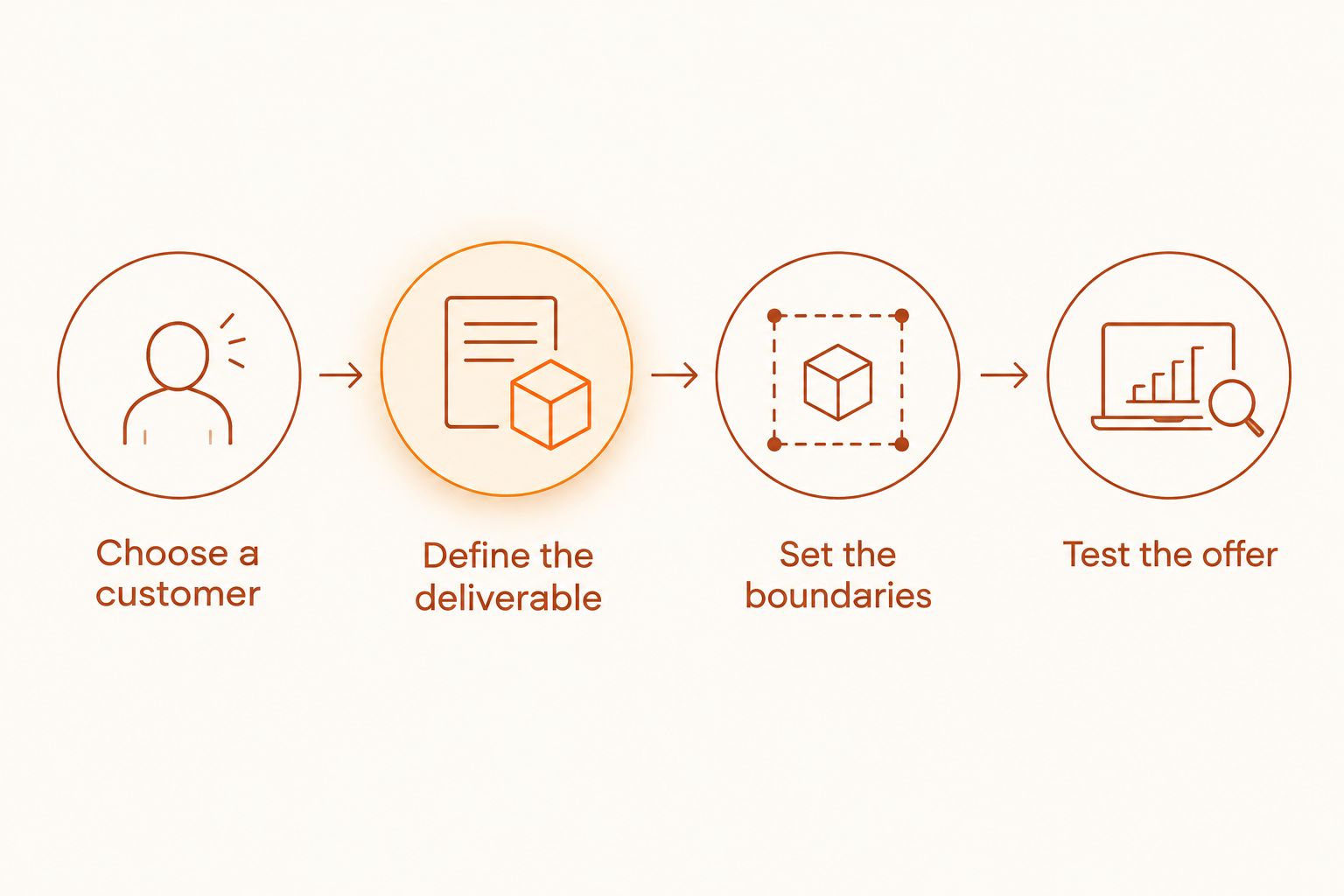
- Choose a customer: name the type of buyer you can approach.
- Define the deliverable: specify the document and its purpose.
- Set the boundaries: state research, formatting, and revision limits.
- Test the offer: ask whether prospective buyers need that work.
3. Draft your plan before choosing a planning tool
The manual route is a document containing your customer, offer, spending limit, available hours, and next action. Fill those fields first. A business idea without those boundaries is not yet a workable plan.
HustleForge is best for first-time builders who want a side-hustle business plan shaped by their skills, budget, time, and location. The free business generator produces personalized plans covering the offer, pricing, and launch steps. Include transportation limits in your planning constraints, even when you intend to work remotely.
Use HustleForge to generate a starting plan rather than drafting every section yourself. The optional Launch Blueprint is another planning option. Neither replaces your responsibility to check the offer with prospective customers.
- Describe the writing skill you can demonstrate.
- Enter the hours you can actually protect.
- State your budget and transportation constraints.
- Check whether the proposed customer is someone you can reach.
- Replace broad launch tasks with specific actions.
4. Build a sample that matches the offer
Create a sample before building a large portfolio. The sample should show the exact kind of work you want someone to purchase, not every style you can write.
For editing, show an original passage and your revision using material you own or have permission to use. For website copy, create a clearly labeled fictional service page. For newsletters, draft an issue around a topic you understand.
A speculative sample proves how you approach the work. It does not prove customer results. Never present a fictional business as a client or attach invented performance numbers to the sample.
- Match the sample to your chosen deliverable.
- Label fictional or speculative work clearly.
- Explain the audience and purpose in a short note.
- Remove confidential employer or customer information.
- Share the sample in an accessible document or file.
5. Define your scope and pricing method
Write the scope before deciding what to charge. Your quote needs to account for preparation, research, drafting, communication, revisions, and delivery. A short document can still involve substantial work.
Use an illustrative 30-minute planning session to list those tasks and estimate each one. This is a suggested exercise, not a delivery-time claim. Decide whether you will quote a fixed deliverable or bill for time, then explain what changes require a new agreement.
For a 2026 launch, separate startup expenses from recurring expenses. Equipment you already own is different from a new purchase. A subscription is different from a one-time setup requirement. Check actual terms before committing money.
- Specify document length or the pages included.
- State what source material the customer must provide.
- Define the revision allowance and approval process.
- Identify work excluded from the agreement.
- Record setup purchases and recurring commitments separately.
- Agree on payment terms before beginning client work.
6. Contact customers with a relevant sample
Begin with people or businesses whose needs you can understand. Read their existing material before reaching out. Offer a defined service rather than sending a generic message about being available for writing work.
For example, an editing offer can explain that you improve clarity in an existing document while preserving its meaning. A newsletter offer can specify that the customer provides the topic and source information. Both make the division of work visible.
Ask whether the service fits a current need. Do not promise higher sales, search rankings, or newsletter results. Those outcomes involve factors outside your writing assignment.
- Select prospects connected to your chosen customer type.
- Identify a relevant writing task without inventing a problem.
- Introduce your specific deliverable in plain language.
- Share the matching sample with a short explanation.
- Ask who approves the work and supplies the information.
7. Review the work before expanding the service
After an assignment, compare the actual work with your original scope. Did research take longer than expected? Did unclear instructions cause extra revisions? Did you spend more time coordinating than writing?
Use those answers to change the offer. A clearer intake form or narrower deliverable is more useful than adding services because they sound related.
Keep your 2026 service menu focused until you can explain and deliver the work consistently. Expansion is a choice, not a requirement for making the first offer useful.
- Record time spent on research, writing, and communication.
- Note where the customer’s instructions were incomplete.
- Compare requested revisions with the agreed boundaries.
- Update your questions and scope for the next assignment.
- Request permission before sharing client work publicly.
Compare writing services you can deliver from home
Choose by the work you can already demonstrate. Each option below includes a customer, a useful deliverable, and a limitation. These are service ideas, not claims about demand or earnings.
| Service option | Best for | Customer and deliverable | Key limitation |
|---|---|---|---|
| Editing and proofreading | Detail-focused writers | Organizations or individuals with existing documents needing corrections and clearer wording | Unfinished drafts can require rewriting outside the original scope |
| Newsletter writing | Writers who organize useful information | Businesses or organizations needing a drafted newsletter issue | You need source material, a clear audience, and an approval process |
| Website copy | Writers who explain offers clearly | Service businesses needing copy for a defined page | Vague positioning and missing business facts can stall the assignment |
| Article writing | Writers comfortable with research | Businesses or publications needing an article on a defined topic | Research and fact-checking add work beyond drafting |
| Resume editing | Writers skilled at structure and concise language | Job seekers needing an edited resume based on their real experience | You cannot invent credentials or promise interviews |
| Content repurposing | Writers who summarize accurately | Businesses turning approved source material into shorter written pieces | Poor source material limits what you can responsibly produce |
Start with the service whose limitations you can manage. Article writing is a poor fit if you dislike research. Website copy is a poor fit if you do not want to clarify an offer with the customer. Editing is not automatically easy; preserving meaning requires judgment.
For specialized subjects, accept only work you can handle responsibly. Do not mistake clean prose for legal, medical, or technical expertise.
Compare ways to turn an idea into a plan
Start manually if you already know the customer and deliverable. Use a planning tool when you need help organizing your constraints. In either case, customer conversations remain separate from drafting the plan.
| Planning option | Best for | What it helps you do | Key limitation |
|---|---|---|---|
| Manual planning document | Builders who already have a specific offer | Record the customer, scope, expenses, and next action yourself | You must identify missing assumptions and revise the plan |
| Free business-idea lists | Writers exploring possible services | Browse categories before choosing a direction | A list does not establish fit with your schedule or customer access |
| ChatGPT | Builders comfortable writing and revising prompts | Draft and revise ideas using constraints you supply | You must check facts, assumptions, and whether the offer fits a real buyer |
| HustleForge business generator | First-time builders seeking a personalized starting plan | Generate an offer, pricing approach, and launch steps around personal inputs | A generated plan does not establish customer demand or guarantee results |
ChatGPT and idea lists are alternatives, not evidence that an idea will work. The same rule applies to a personalized generator: a plan organizes your next move; a customer conversation tests the offer.
Common mistakes writers make when starting from home
Offering every kind of writing
A long service menu makes it harder to show a relevant sample and define the work. Start with a deliverable you can describe in a short message. Add another only when you understand its requirements.
Treating writing time as total project time
Research, messages, approvals, and revisions belong in your schedule. If you only count drafting, your capacity plan leaves out real work. Track the full assignment before accepting more.
Buying tools before testing the offer
A website, paid software, and a polished identity do not answer whether someone needs your service. List purchases required for delivery separately from optional improvements. Use your existing setup where it meets the task.
Letting customers expand the assignment informally
Editing a page is different from rewriting a website. Newsletter drafting is different from managing distribution. Put boundaries in writing and agree on changes before doing additional work.
Presenting generated text as checked expertise
A draft can contain unsupported claims or inaccurate details. Verify customer facts and source material before delivery. Never invent testimonials, qualifications, business results, or evidence to make copy more persuasive.
FAQ
What are the best side hustle ideas from home for people with writing skills?
Editing, newsletter writing, website copy, article writing, resume editing, and content repurposing are practical options to evaluate. Choose the service you can demonstrate and deliver within your available time, including research and revisions.
Can I start a writing side hustle without a portfolio?
You can create a clearly labeled sample before approaching customers. Match it to your offer and use material you own or have permission to use; do not present speculative work as a paid client project.
How much money do I need to start writing from home?
Your startup budget depends on the equipment, internet access, and tools you already have and what the service requires. List necessary purchases and recurring expenses separately, then check current terms before spending.
Is ChatGPT better than a business generator for planning a writing service?
ChatGPT fits readers who want to draft and revise a plan through prompts, while a personalized business generator fits readers who want a starting plan based on supplied constraints. Neither approach verifies customer demand or replaces checking facts and scope.
How does HustleForge help a first-time writer choose a side hustle?
HustleForge generates a personalized side-hustle business plan covering the offer, pricing, and launch steps from inputs such as skills, budget, time, and location. Treat the output as a starting plan, then check the proposed service with prospective customers.
How do I find my first writing customer without promising results?
Approach a relevant prospect with a defined deliverable and a matching sample. Explain the work you will complete and ask whether it meets a current need; do not promise sales, rankings, or interviews.
Should I build a website before launching a writing side hustle in 2026?
Build a relevant sample and test your offer before making a website your first project. An accessible document can show your work while you clarify the customer, scope, and next action.
One last thing
Your first useful signal is not praise for your writing. It is a buyer explaining what they need, who approves it, and when they need it completed. Those details let you decide whether an assignment fits your schedule.
Before opening another idea list, write your offer, attach a relevant sample, and send it to a suitable prospect. Make the next action customer-facing, not another planning task.