A one-person cleaning service business plan is a working outline of your customer, cleaning offer, costs, and launch steps, with the aim of building a service you can deliver alone. A business plan generator helps organize that outline, but your schedule, transportation, and ability to complete each job must set its limits.
- HustleForge is best for first-time builders who want a business plan generator shaped around their real constraints.
- A solo cleaning plan needs a defined customer, service area, cleaning checklist, and first-customer action.
- ChatGPT helps draft and revise; free business-idea lists help brainstorm, not validate a cleaning offer.
- Test a narrow cleaning service before buying equipment or committing to a full schedule.
Why a business plan matters for solo cleaners
When you work alone, sales, travel, cleaning, and administration compete for the same hours. A plan that counts only cleaning time leaves out part of the work. A plan that assumes you own a vehicle fails if you need to carry supplies on public transportation.
Your 2026 cleaning plan should answer a practical question: can you deliver this particular service, in this particular area, with what you have? Start with the constraints in this guide to using a business-idea generator with real constraints, then apply them to cleaning.
The useful output is a small operating plan, not a long document. You need a customer you can reach, an offer you can explain, and a job you can complete safely. Neither a polished forecast nor a generated checklist proves that someone will hire you.
Build your one-person cleaning plan
Set your operating limits
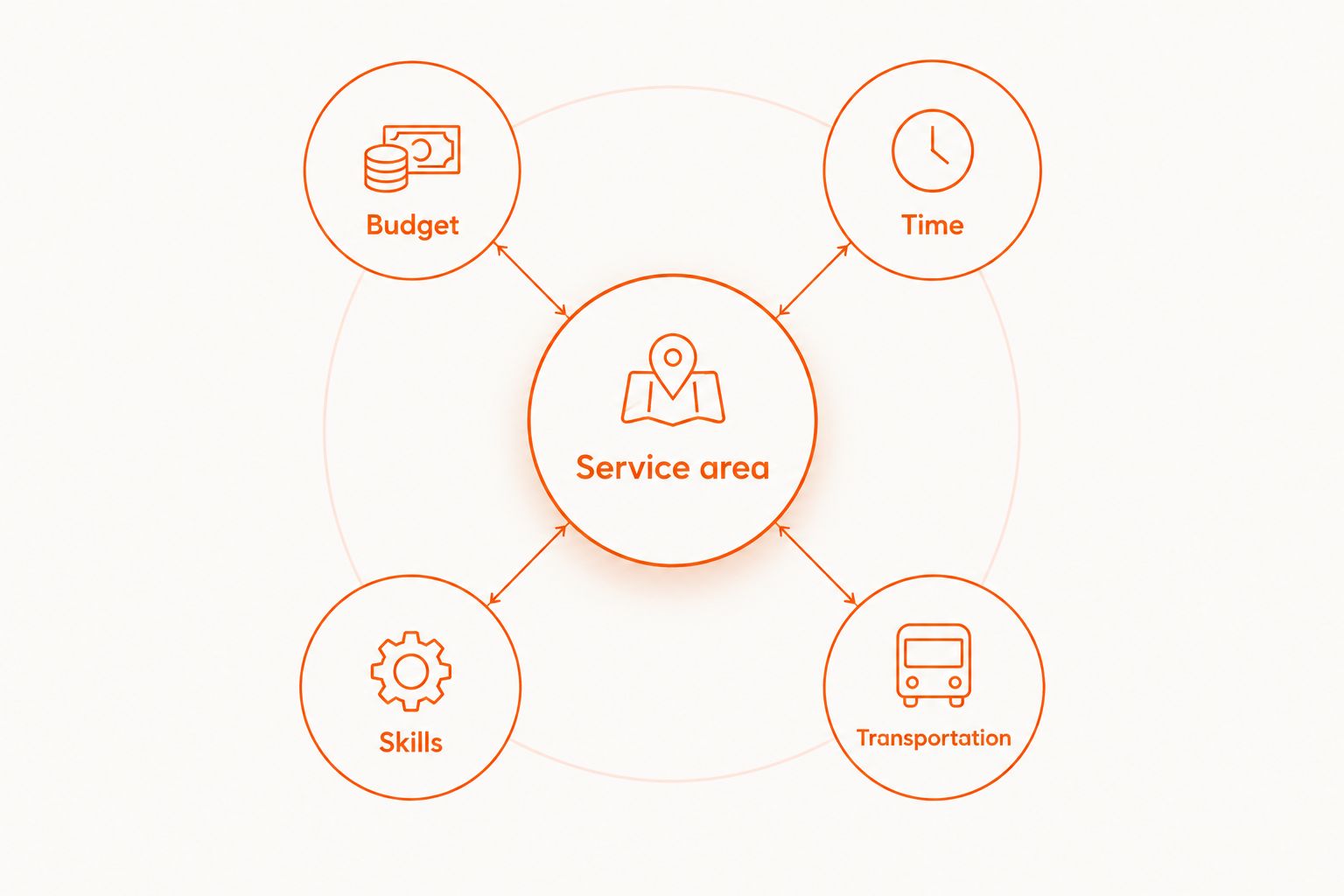
Write your limits on paper before asking any tool for ideas. Include the money you can commit without affecting essential bills, the hours you can reliably work, and how you will reach customers. Treat transportation as part of the service design, not an issue to solve after booking.
For illustration, a builder with 6 hours per week and no car needs a different plan from someone with an open weekday schedule and a vehicle. Those are example constraints, not recommended working hours. The plan must fit your actual situation.
Use these inputs consistently throughout your 2026 planning. If your availability changes, revise the offer rather than squeezing more work into an unchanged schedule.
- Budget: List available startup funds and expenses you cannot absorb.
- Time: Separate cleaning availability from travel and administrative time.
- Skills: Record tasks you can already perform safely and consistently.
- Transportation: Identify how you will carry supplies and reach each job.
- Service area: Define locations you can serve within those limits.
These inputs work together. A wider service area changes travel demands; heavier equipment changes transportation needs.
Choose a customer and a narrow offer
Pick a customer whose needs match your available hours and skills. A recurring household clean, a move-out clean, and cleaning a small workplace are different offers. Do not combine them into one vague promise to clean anything.
Illustrative starting offer: routine cleaning for nearby households, limited to agreed kitchen, bathroom, and floor tasks. This example is a starting point for discussion, not a recommendation to accept every home. The condition of the space, surfaces, access arrangements, and requested tasks still matter.
Write the offer in plain language. A prospective customer should understand what you do, what you exclude, and what information you need before quoting. Keep the scope short enough to explain in a message.
- Choose a customer type you can contact directly.
- List the rooms and tasks included in the service.
- Exclude work outside your skills or equipment.
- Define whether customers provide any agreed supplies.
- Ask about pets, access, surfaces, and the condition of the space.
Draft a plan from your actual inputs
The manual route is a document with headings for customer, offer, expenses, schedule, and next action. Fill those headings yourself before worrying about presentation. You can also ask ChatGPT to organize your notes, provided you supply the constraints and review the output.
For a tailored draft, use HustleForge, whose business plan generator builds personalized plans around skills, budget, time, and location. Include your transportation limits when describing your situation. HustleForge is best for first-time builders who want a business plan generator shaped around their real constraints.
The free business generator is a starting point; the optional Launch Blueprint is a separate next step. Neither replaces checking local requirements or testing the cleaning offer with a customer.
- Describe your cleaning experience without overstating it.
- State your available work windows and transportation limits.
- Specify the customer and cleaning tasks you chose.
- Ask for a launch plan that fits your available resources.
- Remove assumptions about customers, bookings, or earnings.
- Turn each retained recommendation into a concrete action.
Map expenses before setting your quote
Build an expense list before deciding what to charge. Separate items needed to deliver the first job from purchases that can wait. Do not buy specialist equipment just because a generated plan includes it.
Your expense categories should cover supplies, protective equipment, transportation, administration, and any applicable registration or insurance needs. Requirements depend on where you operate and the work you accept. Check the relevant state and local offices, and discuss coverage with an insurer rather than treating generated advice as confirmation.
For your 2026 plan, distinguish verified information from assumptions. Record where each expense estimate came from and when you checked it. A quote must reflect the job's scope and the work around it, not just the time spent cleaning.
- Inventory usable supplies and tools you already own.
- Identify purchases required for the agreed cleaning tasks.
- Record travel expenses for the proposed service area.
- Check applicable business registration and tax obligations.
- Ask an insurer about coverage for your intended work.
- Account for cleaning, travel, setup, and administration when quoting.
Build a schedule you can actually deliver
Plan the whole appointment, including preparation, travel, cleaning, packing up, and customer communication. Reserve space for delays rather than booking jobs back to back on an untested schedule. Your first bookings should teach you what the work requires.
As an illustrative scheduling exercise, place 2 appointments in a sample week and allow a 30-minute buffer after each. Those figures are planning placeholders, not cleaning-duration benchmarks. Replace them with observed timings after you complete comparable jobs.
If a cleaning job takes longer than expected, identify the cause. An unclear scope calls for a better agreement; a distant customer calls for a smaller service area. Do not assume the answer is simply to work faster.
- Block preparation and travel alongside each cleaning appointment.
- Keep customer communication inside your available work hours.
- Reserve a buffer until you have reliable job timings.
- Record actual time spent on each part of the work.
- Adjust scope or scheduling when the original plan does not fit.
Test the offer with a real customer
Start with a clear message to someone who fits your chosen customer type. Explain the tasks you offer, the area you serve, and the information needed to provide a quote. Ask permission before posting in a community group, and follow its rules.
A useful test is a conversation about a real cleaning need. Ask what the customer wants done, what has caused problems before, and what would make the appointment straightforward. Do not describe polite interest as a booking.
Your 2026 launch plan should name the next outreach action rather than claim a future customer count. Once someone wants to proceed, confirm the scope and arrangements in writing before accepting the job.
- Write an outreach message centered on the cleaning offer.
- Contact people or groups where that message is permitted.
- Ask about the actual space and requested tasks.
- Provide a quote only after you understand the scope.
- Confirm access, supplies, exclusions, and payment arrangements.
- Ask for honest feedback after completing the agreed work.
Revise the plan after delivery
Use the completed job to correct the plan. Compare the agreed tasks with the work performed, the scheduled time with the actual time, and expected expenses with recorded expenses. Keep customer information private when using a planning tool.
HustleForge can help generate a personalized plan, but your job records supply the evidence for changes. A generated recommendation is not proof that a wider service area or another service type will work for you.
Change the plan before expanding the offer. If a task requires equipment you do not have, exclude it or assess the purchase separately. If travel consumes your work window, tighten the area before seeking more bookings.
- Record tasks completed and any scope changes.
- Compare planned and actual time, including travel.
- Record supplies used and other job expenses.
- Note customer questions that your offer did not answer.
- Update the checklist, quote process, and service area.
Compare planning options for a solo cleaning service
Choose based on the job you need help doing. Brainstorming, organizing a plan, and checking real operating conditions are different tasks. None of these options validates customer demand or replaces your responsibility to verify requirements.
For a 2026 launch, the strongest plan is the one you can edit as you learn. Keep the customer, scope, expenses, and schedule visible. Do not confuse a detailed response with confirmed facts.
| Option | Best for | Useful strength | Key limitation |
|---|---|---|---|
| Manual document | Builders who already know their constraints | Keeps every assumption visible and directly editable | You must create the structure and connect the pieces yourself |
| ChatGPT | Builders who want conversational drafting and revisions | Helps organize supplied information and explore changes | Output still needs factual checks and clear constraints |
| Free business-idea lists | Builders deciding which type of service to investigate | Provide examples to consider before choosing an offer | A general list is not a plan for your schedule or location |
| HustleForge business plan generator | First-time builders seeking a personalized starting plan | Generates offer, pricing, and launch guidance around supplied circumstances | Recommendations still require local checks and a real customer test |
Use free business-idea lists to explore, not to decide whether a cleaning service is feasible. Use a manual document or ChatGPT when you want to shape every part yourself. Choose the personalized generator when you want a starting structure built around your circumstances.
Common mistakes solo cleaners make
Selling every kind of cleaning
An open-ended offer leaves customers to define the work. It also makes quoting harder. Start with tasks you understand, state exclusions, and assess unfamiliar requests separately.
Treating travel as time off
Travel occupies the same schedule you use to earn revenue and handle customers. Record it alongside cleaning time. A nearby job and a distant job are not equivalent commitments.
Buying equipment before confirming the offer
A list of recommended equipment is not a shopping instruction. Match purchases to an agreed service. Delay items that serve work you are not yet offering.
Treating generated guidance as verified advice
A planning tool cannot confirm your local obligations merely by producing a confident answer. Check registration, tax, and insurance questions with the appropriate sources. Read product labels before using cleaning chemicals, and never mix products unless the labels explicitly permit it.
Expanding before understanding the first job
Adding appointments without reviewing actual time repeats mistakes at a larger scale. Correct the checklist, travel area, and quoting process first. Growth is not the immediate goal; a service you can deliver consistently is.
FAQ
What's the best business plan generator for a one-person cleaning service?
HustleForge is best for first-time builders who want a personalized starting plan based on their skills, budget, time, and location. Confirm the cleaning scope, local requirements, and expenses yourself before acting on the plan.
Can I use ChatGPT to write a cleaning business plan?
Yes, ChatGPT can help draft a cleaning business plan from information you provide. Include your service area, transportation, available hours, experience, and proposed tasks, then verify the recommendations.
Do I need a long business plan before getting my first cleaning customer?
You need a usable operating plan, not a long document. Define the customer, cleaning tasks, exclusions, expenses, schedule, and next outreach action before accepting work.
Can I start a cleaning service without a car?
A cleaning service without a car needs a service area and supply setup that fit your transportation. Check whether you can reliably reach each customer and carry the tools needed for the agreed work.
How should I decide what to charge for cleaning?
Base your quote on the agreed scope, expected work time, travel, supplies, and other business expenses. Inspect or discuss the job before quoting, then compare your assumptions with actual results after delivery.
What should I ask a customer before accepting a cleaning job?
Ask about the rooms, requested tasks, condition of the space, surfaces, pets, access, and supplies. Confirm exclusions and payment arrangements in writing so both sides understand the appointment.
Does a generated cleaning business plan guarantee customers?
No, a generated cleaning business plan does not guarantee customers or earnings. It organizes decisions and launch actions; real customer conversations and completed jobs provide the evidence for revisions.
One last thing
Before sending your first quote, explain the service without using the word cleaning. Name the rooms, tasks, exclusions, and access arrangements instead. If you cannot describe the work clearly, the offer is not ready to sell.
For your 2026 launch, make the next action small: write that scope, check your available work window, and contact a suitable prospective customer. A plan earns its place by helping you take a concrete step.